Location: Zall Herr & Bërzhitë, Municipality of Tirana
Implementation period: October 2023 – October 2024
Funding: SlovakAid
Total Budget: €13,436 (€10,000 funded by SlovakAid)
Implementing partners: N/A
Building on the success of the 2022–2023 pilot, this follow-up project expanded the organic composting scheme to additional rural areas within Tirana Municipality, including Zall Herr and Bërzhitë.
The project further reduced organic waste, enhanced soil quality, and strengthened community engagement in sustainable environmental practices. Through practical training, mentoring, and collaboration with local authorities and schools, the initiative helped households, farmers, and students adopt organic composting as part of everyday rural life.
This expansion marked an important step in developing a replicable and scalable model for sustainable waste management in Albanian villages, linking environmental protection with rural economic development.
Key Achievements
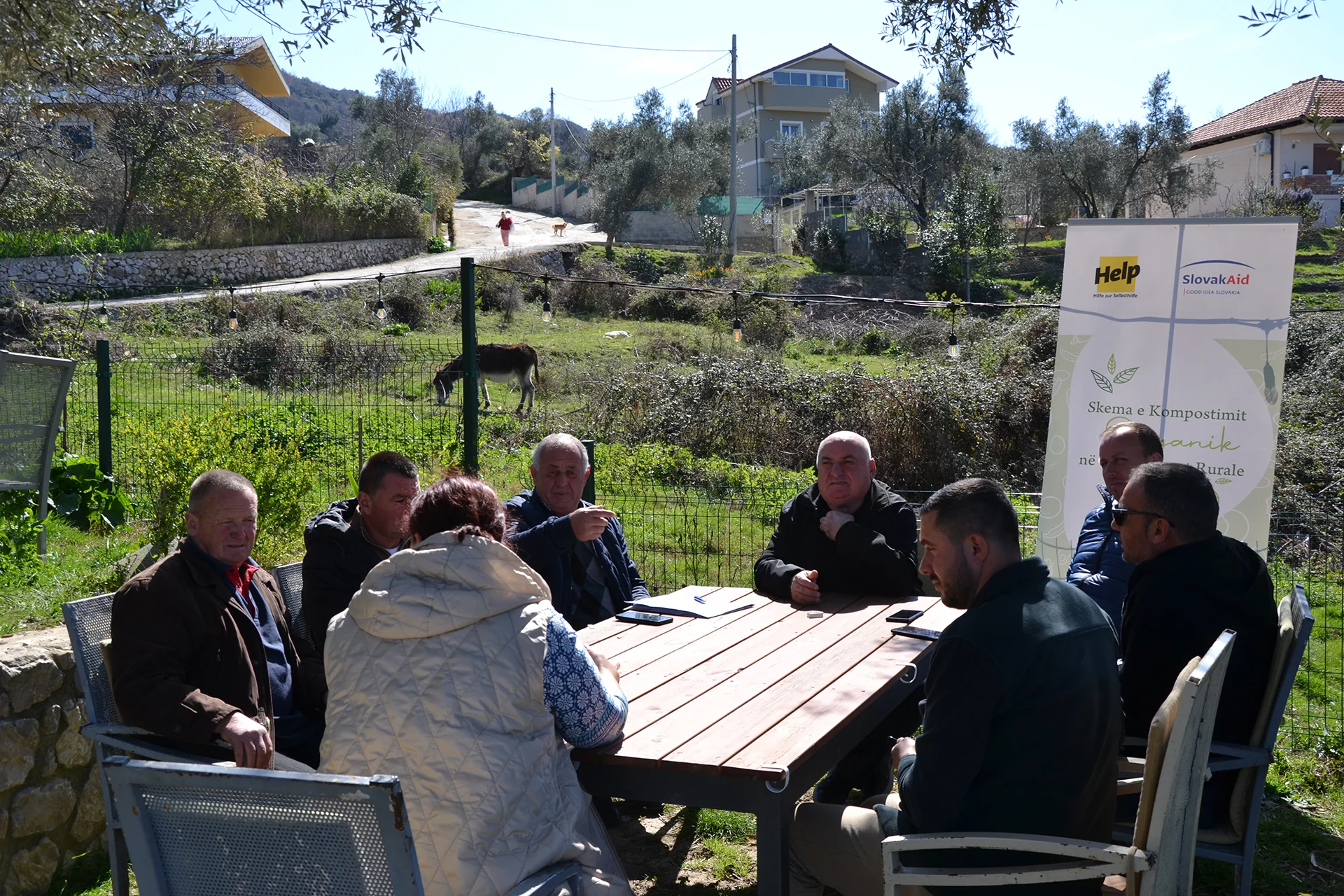
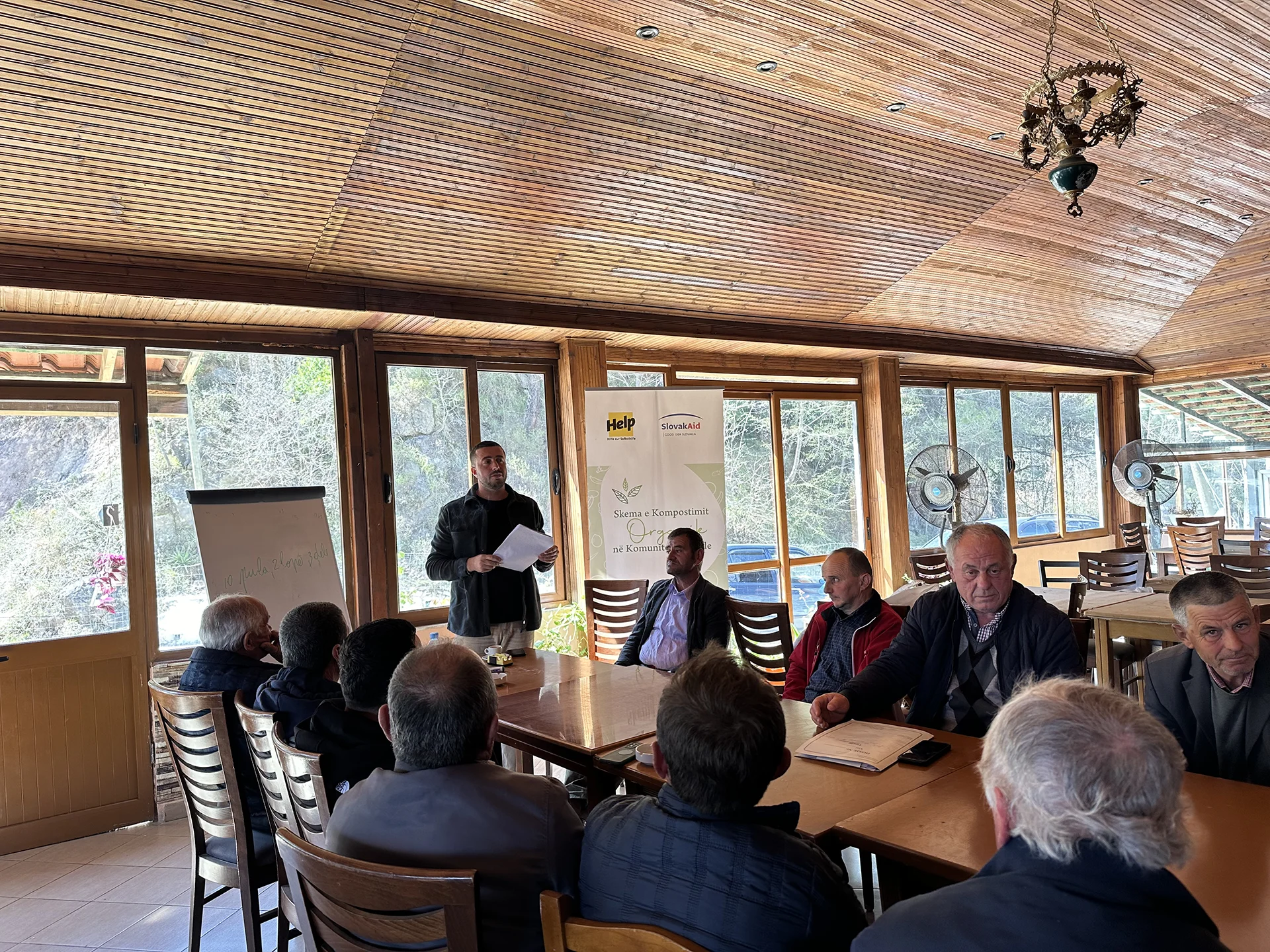
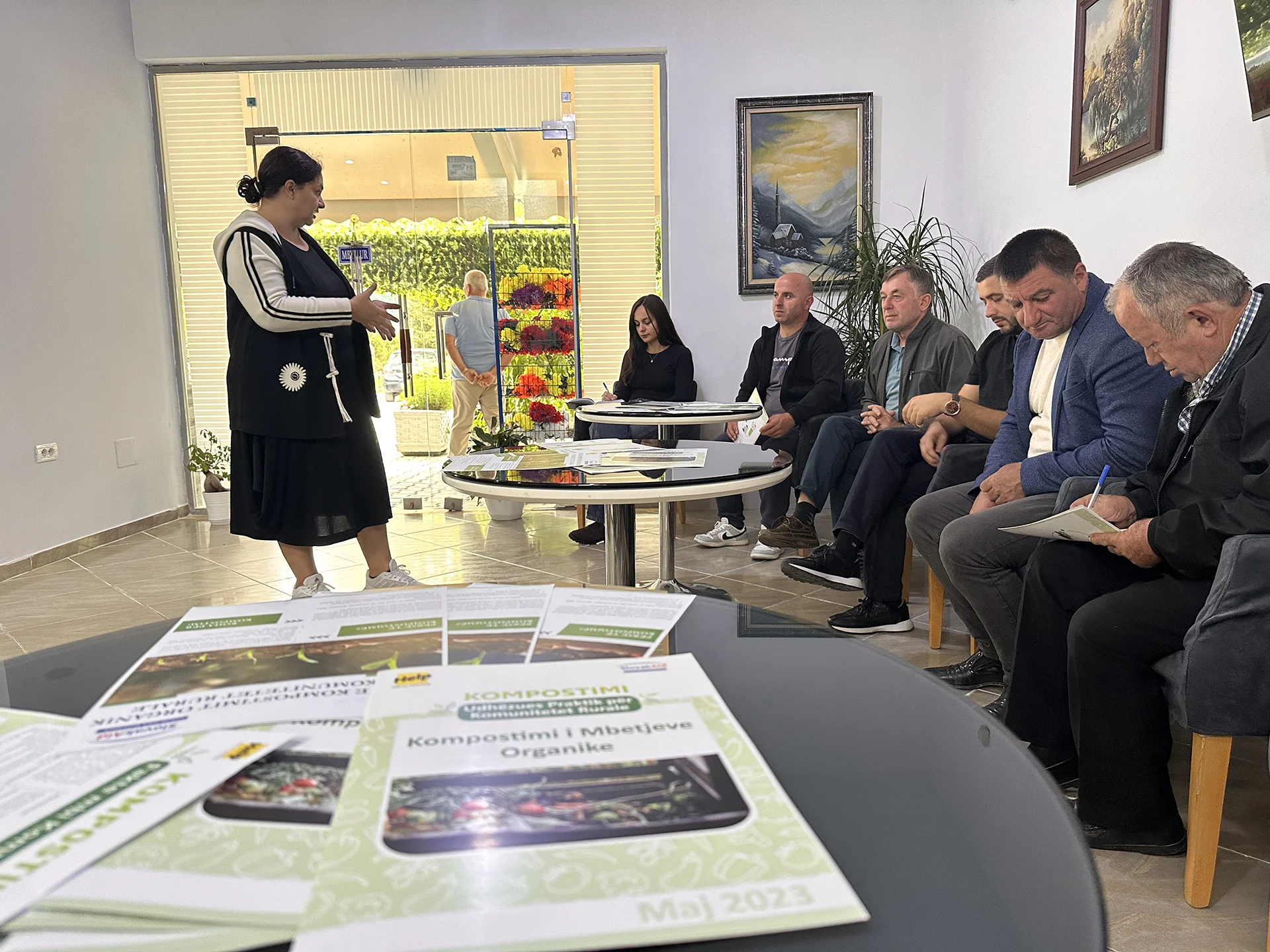
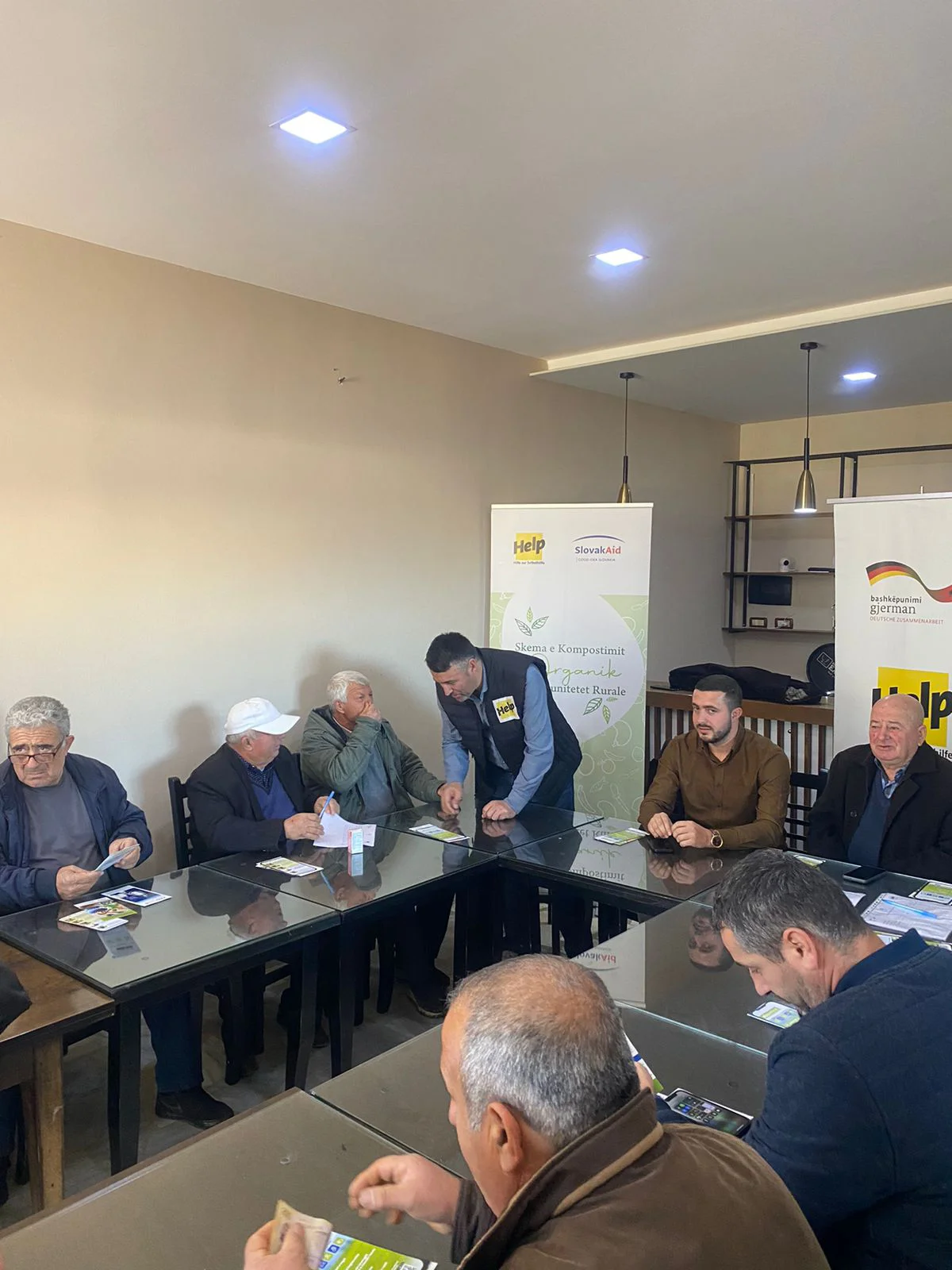
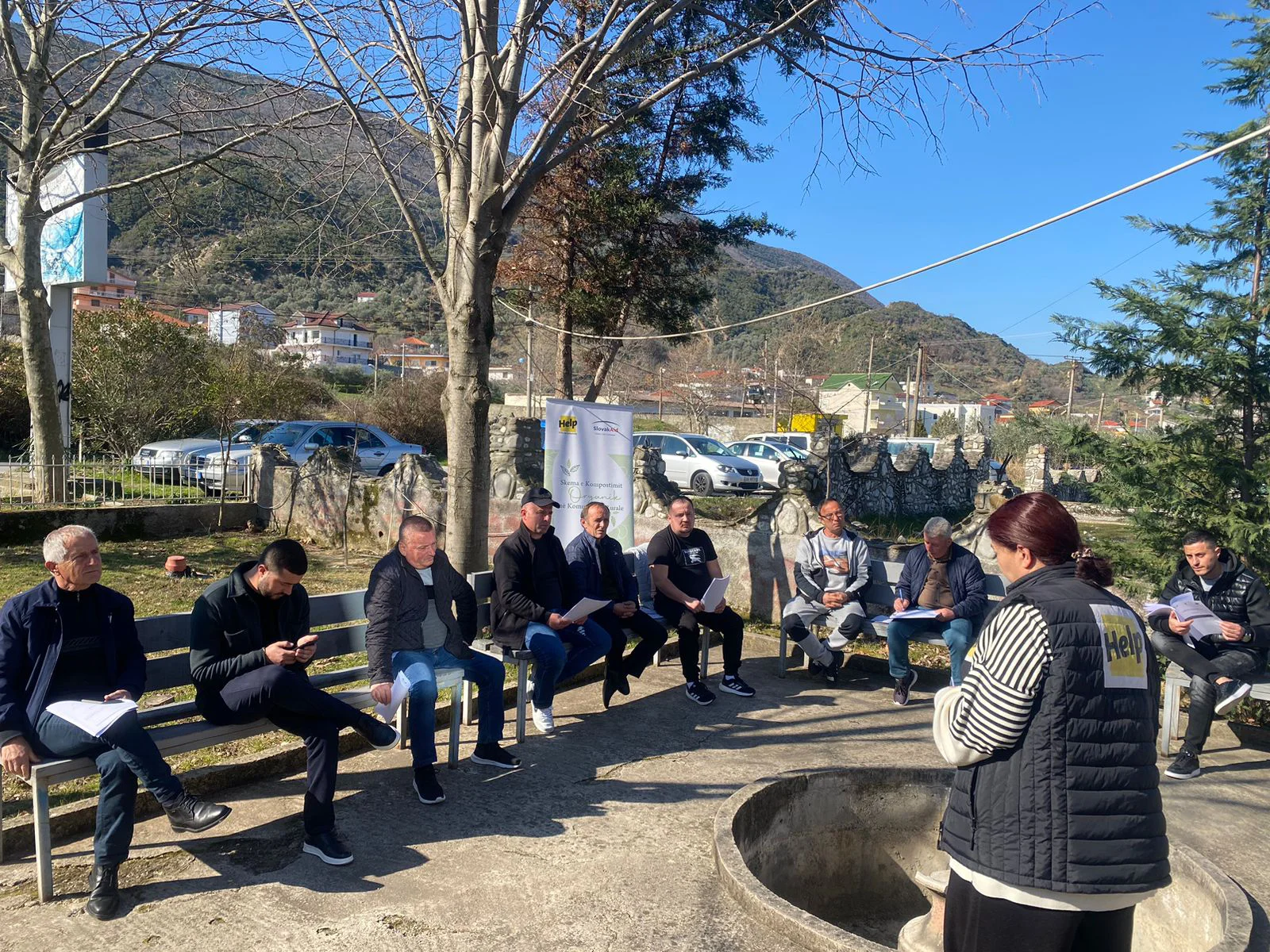
- 109 local residents attended motivational workshops in both administrative units.
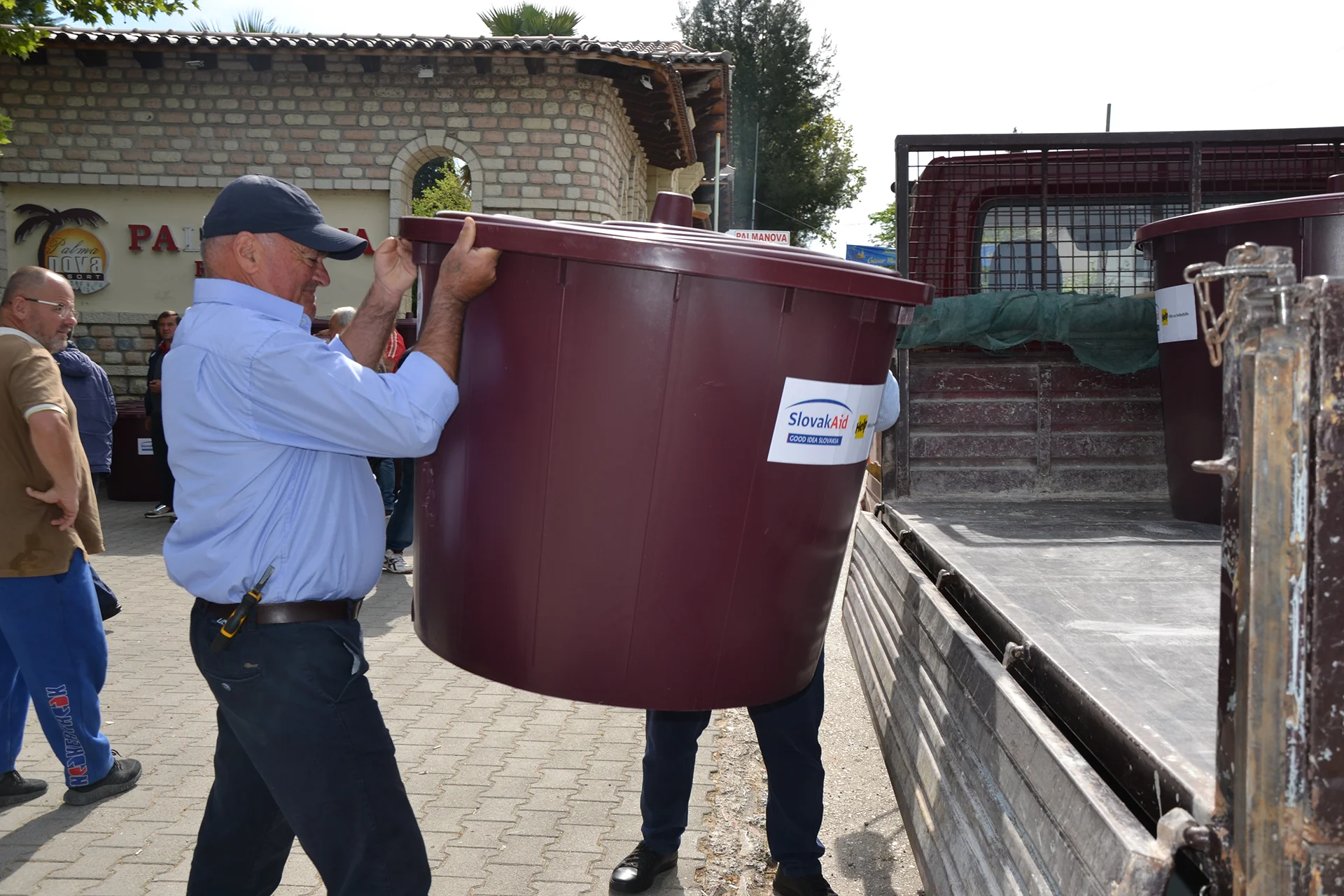
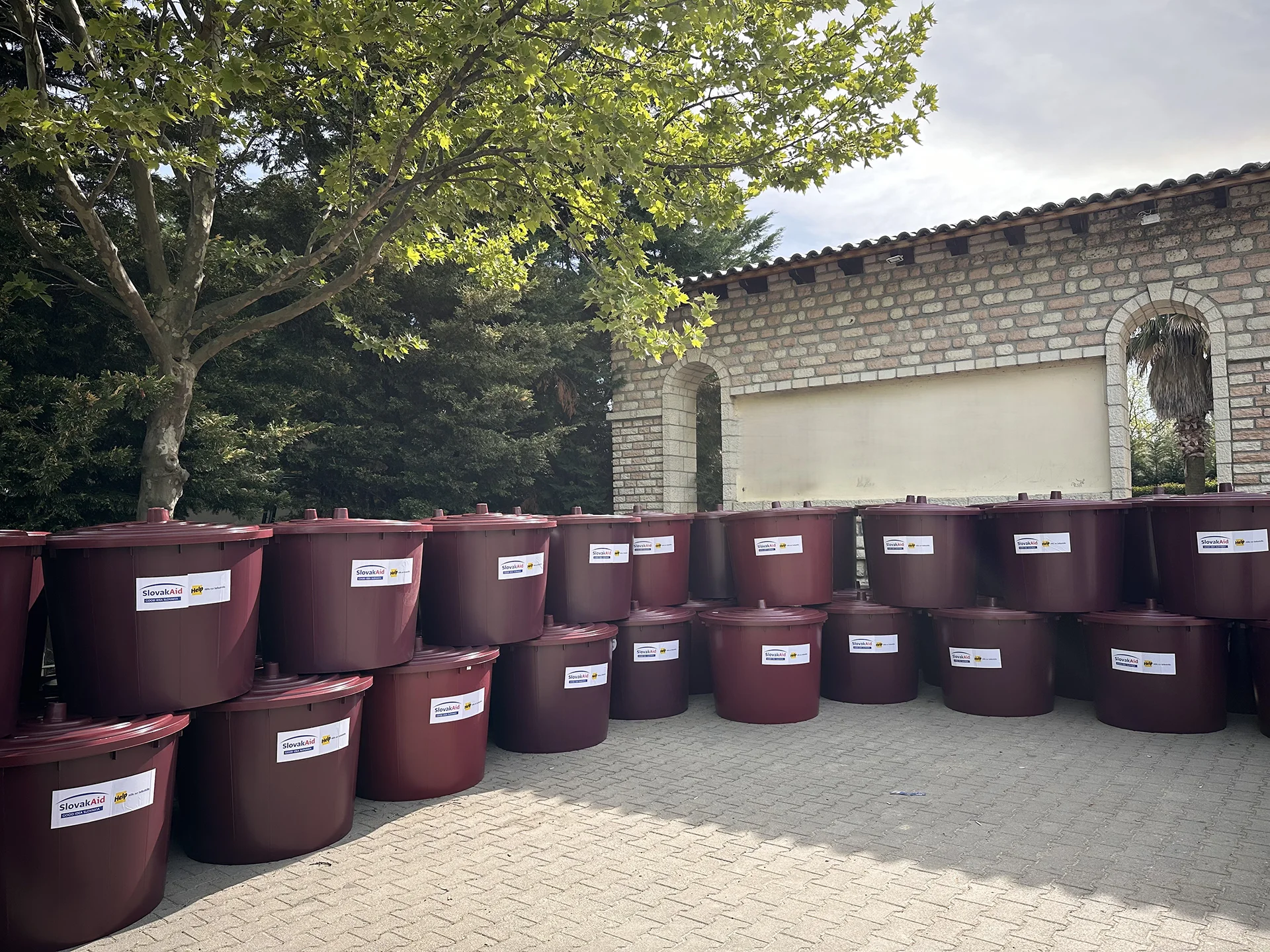
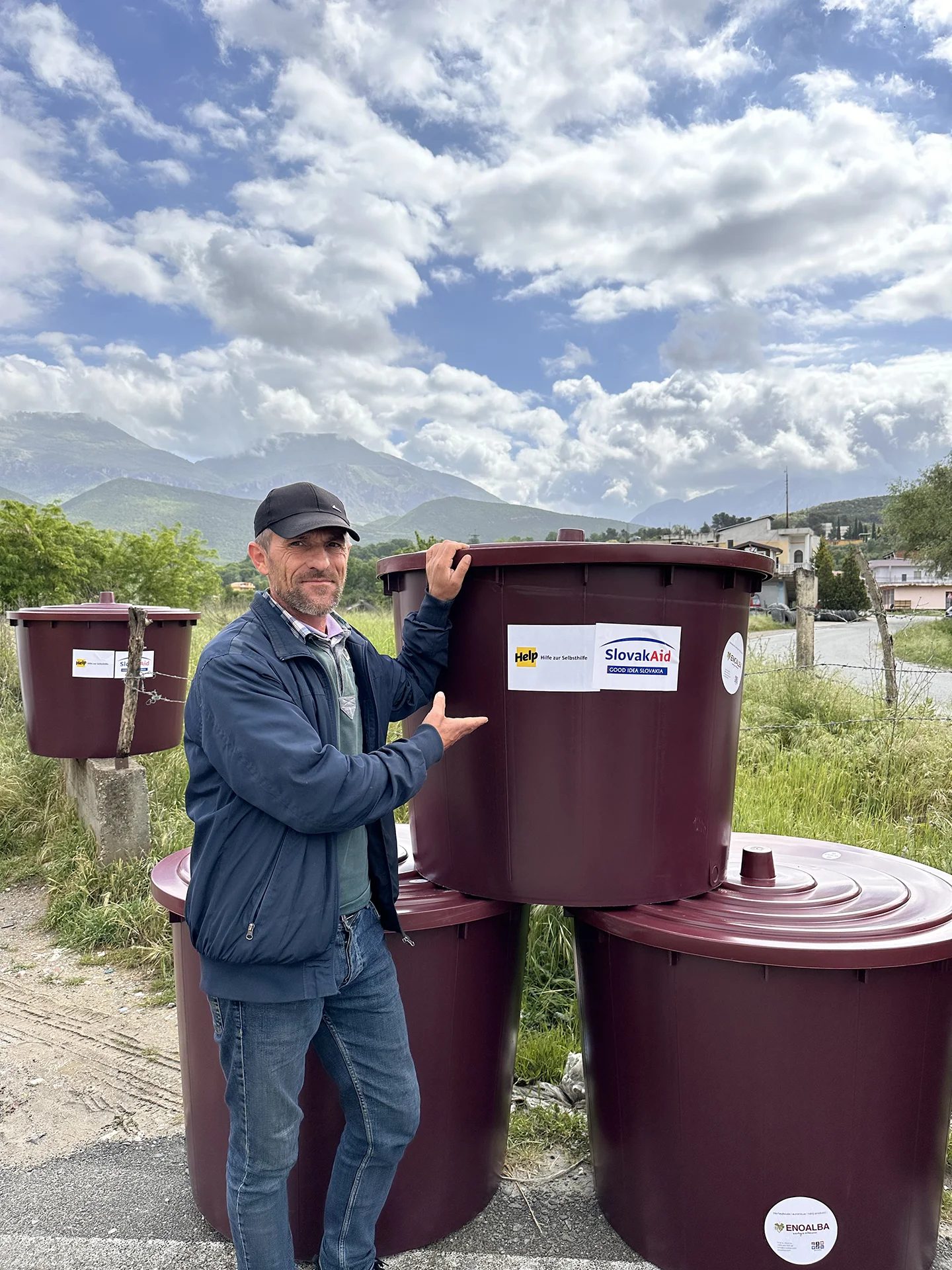
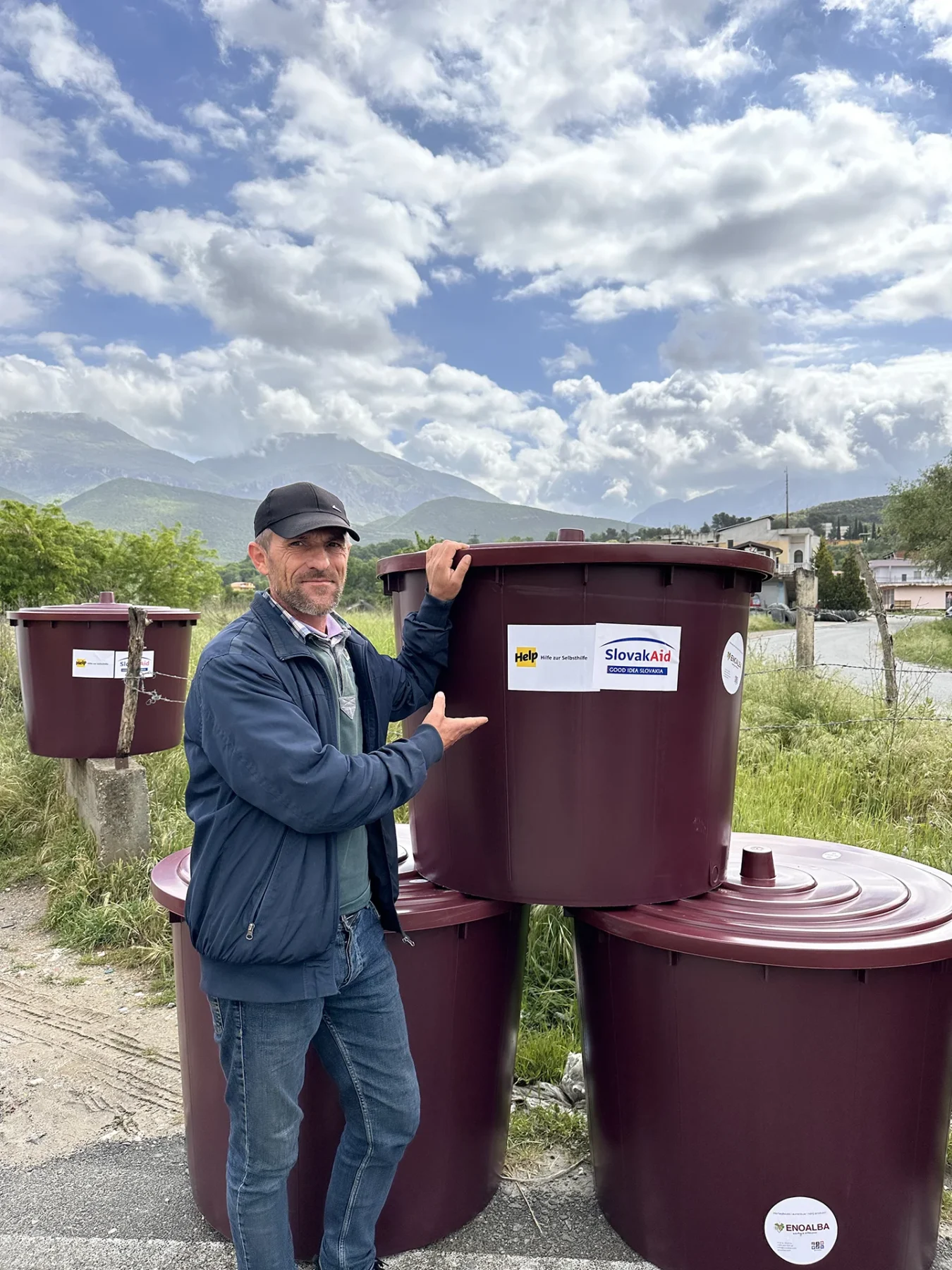
- 60 households (15 in Zall Herr, 45 in Bërzhitë) equipped with composting bins and trained to compost household and farm waste.
- 72 households started composting actively, supported through mentoring and follow-up visits.
- Five community mediators engaged to coach and monitor participating families.
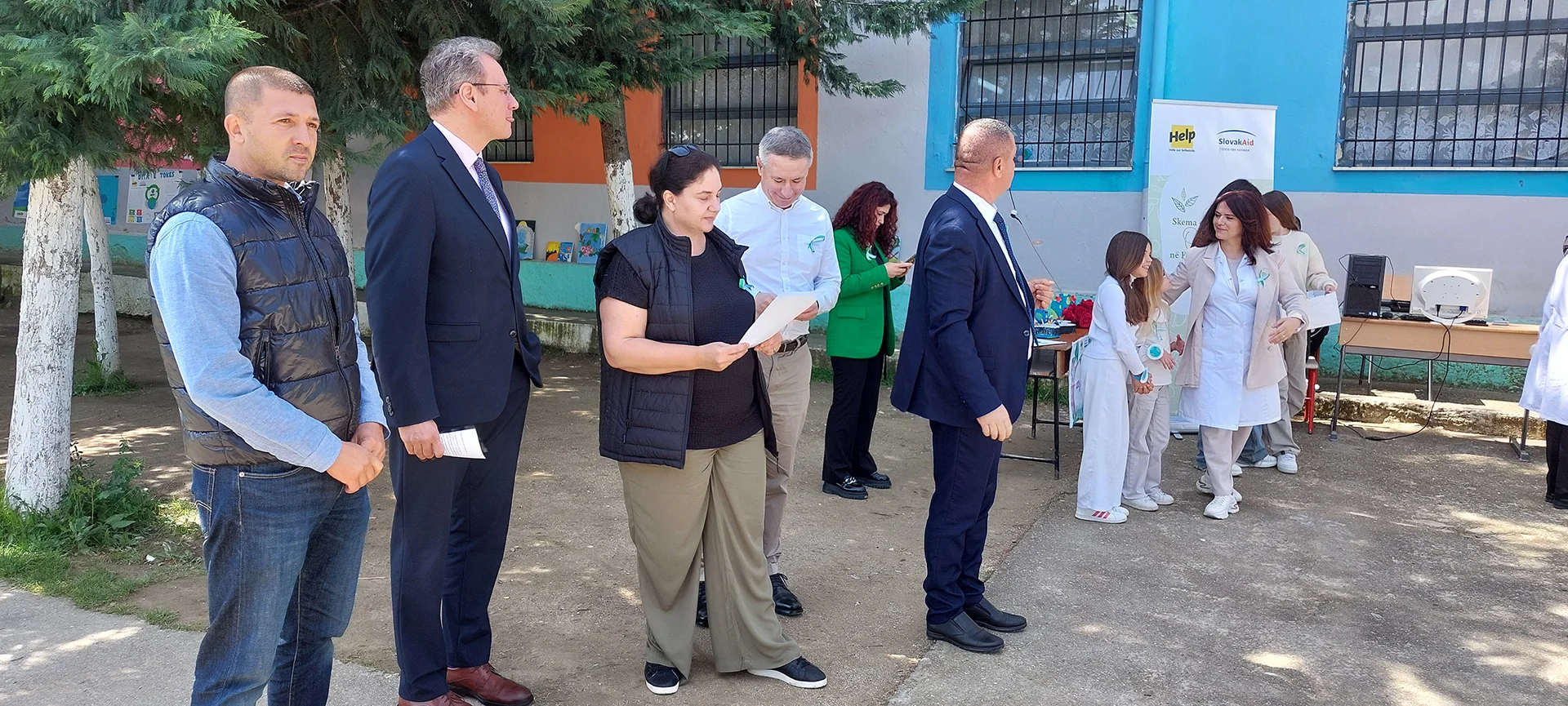
- Five public events and school sessions raised awareness among 200+ students and community members.
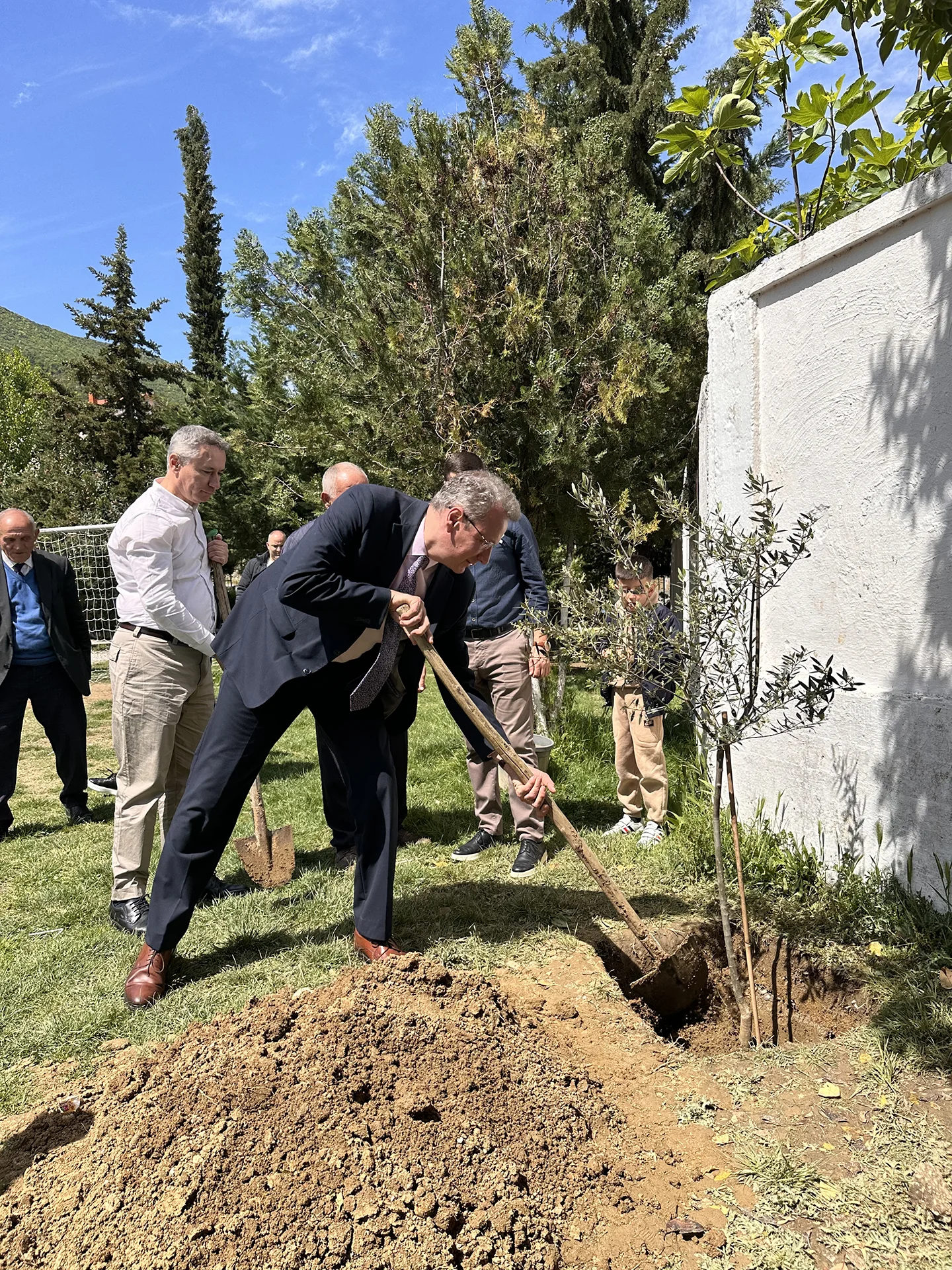
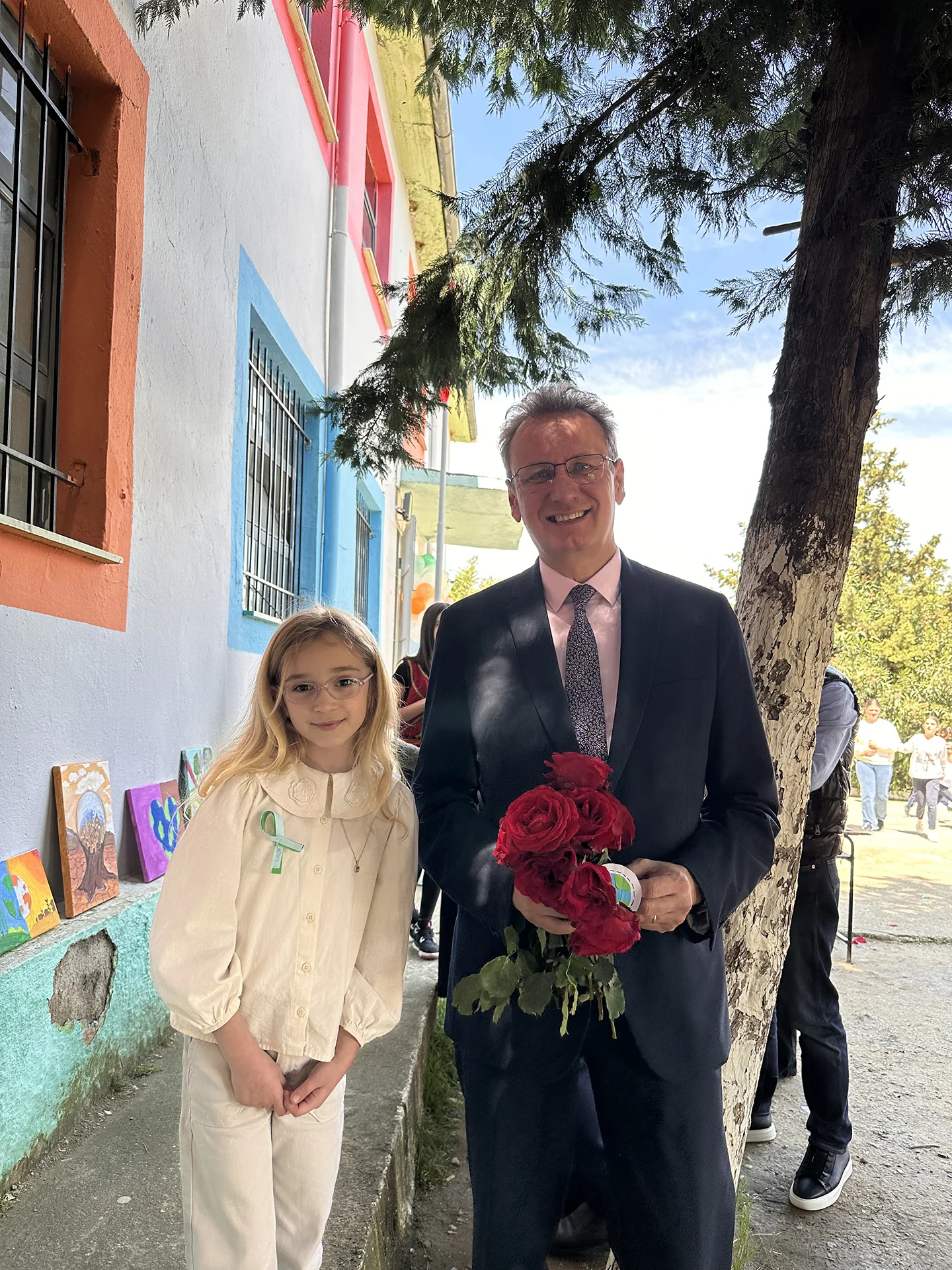
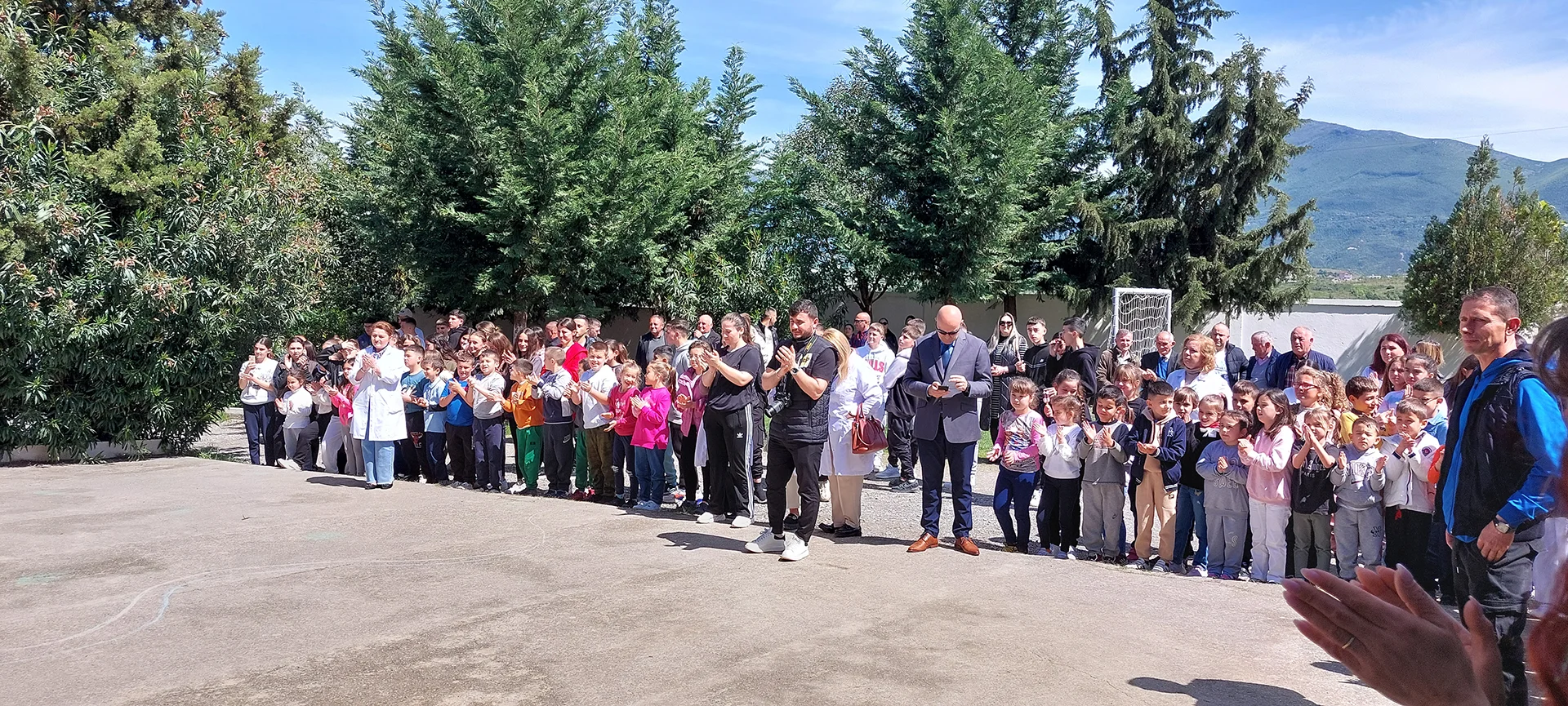
- 96 pupils at “Selman Meta” school in Bërzhitë created eco-art projects and performed on Earth Day, joined by the Slovak Ambassador and local authorities.
Impact
- Expansion of composting to new rural communities, reducing organic waste and landfill pressure.
- Strengthened awareness and environmental responsibility among families and youth.
- Introduction of peer-to-peer farmer learning as an effective way to promote composting practices.
- Enhanced soil health and farm productivity through use of organic fertilizer instead of chemicals.
Sustainability
The project established a scalable model for rural composting, combining household training, local leadership, and school-based environmental education.
Composting bins, printed guides, and a resource library ensured continuity, while Help plans to extend the model to other municipalities through future rural development projects. Local mediators and schools continue to promote sustainable waste management at community level.
Lessons Learned
- Rural composting projects should last at least 12–18 months to ensure behaviour change.
- Involving trusted community leaders and local farmers increases participation and trust.
- Women’s participation improves when workshops are held closer to home or at flexible times.
- Continuous education and peer learning among farmers strengthen sustainability.